And The Winner Is...

Once again, the winner of the 'World's Most Loveable Critter" goes to...drum roll...The red panda!
Here are five fun facts about everyone's favourite high altitude mammal.
Are They Related to Giant Pandas?
Nope! French zoologist Frédéric Cuvier discovered red pandas 50 years before Pere Armand David discovered the giant panda (in 1869). Giant pandas were named after their brownish-red friends because of their similar diet and similar physical characteristics, including a shared "false thumb" (an enlarged section of the wrist bone, used to help them eat Bamboo). The red panda is actually the sole surviving member of the 'Ailuridae' family of mammals. Their closest relatives ('Parailurus') died out 3 to 4 million years ago. Many scientists call red pandas a "living fossil" because of their remarkable evolutionary lineage which dates back as far as 18 to 25 million years!

Where Do They Live?
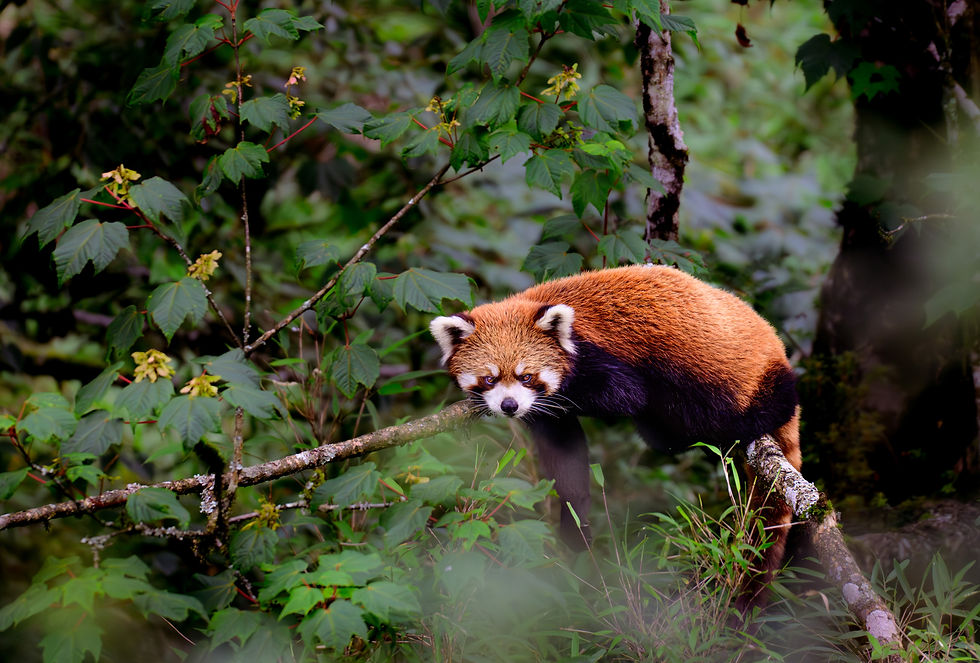
You can find red pandas in the high altitude montane forests of the Himalayas and surrounding mountain ranges - across China, Nepal, India and Myanmar. Despite being endangered, their distribution is actually quite large! Half of all red pandas are thought to live in China.

What Do They Eat?
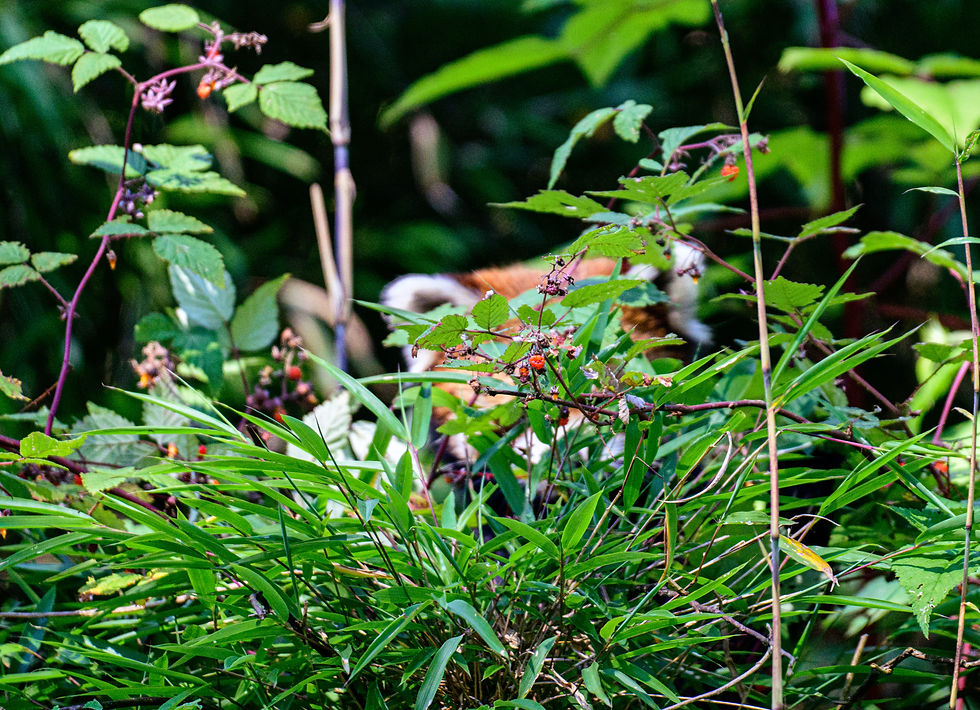
Just like giant pandas, red pandas are famous for nibbling on Bamboo. It constitutes roughly 95% of their diet, and contains all the fibre and nutrients they need. They love fresh shoots and leaves. They are actually omnivorous, though, and have been known to snack on insects, and sometimes even small birds and lizards! In some zoos, people love to feed them chunks of apple. This is one of their favourite snacks, but is of course not as common as Bamboo. In some regions, especially the Indian Himalayan states, apples are farmed and more readily available than in the red panda habitats of China. You can often find them gorging on juicy berries in the summer (just as a well deserved treat, of course).
Who Do They Share the Forest With?
The biodiversity of the red panda habitat is very exciting. With a good pair of binoculars you can spot all sorts of birds, small mammals, snakes and insects. They also share a habitat with illusive and charismatic friends like pangolins, black bears, leopard cats, and even snow leopards. Not to mention, of course, giant pandas!


Are They Rare?
Unfortunately red panda's are classed as 'endangered' with their population continuously decreasing. Scientists think there could be as few as 2,500 remaining in the wild but a 2015 estimate thought there could be up to 10,000. Because of habitat loss caused by human agriculture, disease, and occasional hunting, their population is said to have declined by 50% since 1997. But hope is not lost! Organisations like the WWF, Red Panda Network, and local governments are working hard to look after them.

What Are They Called in Chinese?
The Chinese might have come up with the best name for them: 小熊猫 (Xiǎo xióngmāo). It literally translates to 'small bear cat'. And it's true! If a bear and a cat had a lovechild, it would probably turn out to be something like a red panda. Not only are they a similar size to a house cat, but they have many of the same mannerisms. They groom themselves with their tongue; they let out a gaping, body-stretching yawn every few minutes; they love to climb; and they can usually be found either eating or loafing around! In fact, just like house cats, red pandas sleep up to 17 hours a day.

So there we have it. A well deserved win for the 'Worlds Most Loveable Critter', the red panda!